
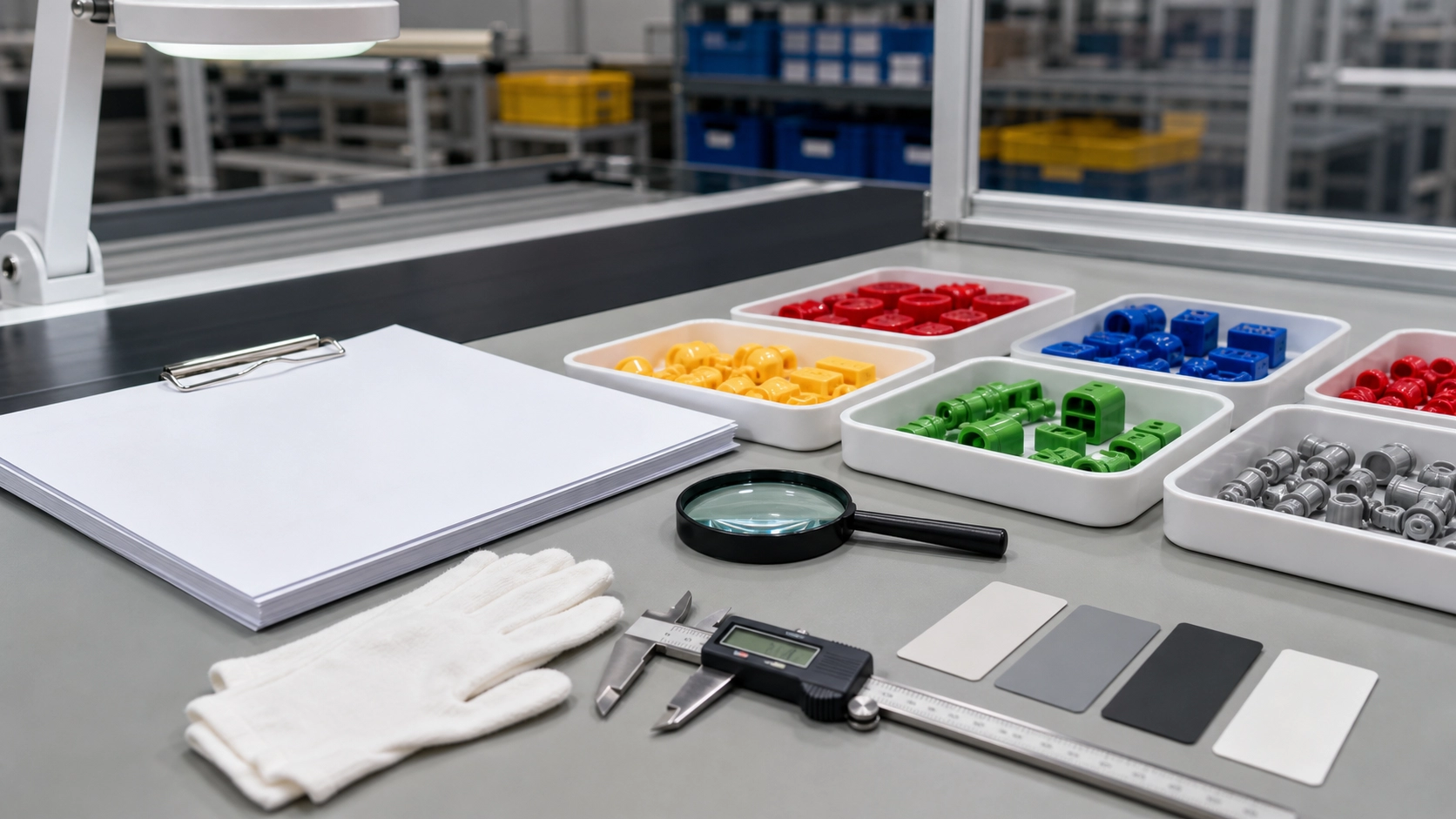
Quality Starts With an Agreed Specification
Quality control in OEM plastic toy production should begin before the first production unit is molded. Inspectors can only make consistent decisions when the project has clear product drawings, material requirements, appearance standards, approved samples, packaging instructions, and test methods. A checklist turns these sources into repeatable checkpoints, but it does not replace engineering judgment or market-specific testing.
The plan should identify which characteristics are critical to function, assembly, appearance, and intended use. It should also define who can approve a deviation and how revisions are communicated. If requirements change, drawings, samples, work instructions, and inspection records should be updated together so production is not judged against conflicting references.
Pre-Production Document Review
- Confirm product and component names, revision identifiers, and current approved files.
- Verify material grades, color references, finishes, decorations, and any permitted substitutes.
- List critical dimensions, tolerances, assembly gaps, joint movement, and functional checks.
- Identify cosmetic zones and define examples of acceptable and unacceptable appearance.
- Confirm component quantities, accessory sets, labels, packaging layout, and carton markings.
- Define the inspection method, frequency, sampling plan, record format, and release authority.
An approved reference sample is especially helpful for color, texture, seam alignment, and painted details. It should be identified, protected from damage and fading, and linked to the correct revision. A sample alone is insufficient for hidden dimensions or performance requirements, so it should be used together with drawings and written criteria.
Incoming Material and Component Checks
Plastic and Color Materials
Incoming checks can confirm material identification, supplier lot information, colorant designation, packaging condition, and storage requirements. Resin or additives that are wet, contaminated, mixed, or incorrectly labeled can create defects that later process adjustments cannot reliably correct. Where material properties are critical, documentation or verification methods should be defined in the project quality plan.
Purchased Parts and Accessories
Fasteners, axles, magnets, springs, electronic parts, fabric items, and printed materials should be matched to approved specifications. Review dimensions, finish, quantity, orientation, and any relevant functional characteristics. Small purchased components can affect assembly safety and consistency, so changes should not be accepted simply because the parts appear similar.
Packaging Materials
Inspect box dimensions, inserts, bags, trays, printing, barcodes, and shipping cartons against approved artwork and structural specifications. Packaging should hold the product as intended without creating avoidable pressure, abrasion, or loose movement. Printed content and market requirements should be reviewed by the responsible specialists rather than inferred during factory inspection.
First-Article and Startup Approval
At the start of a run, inspect parts from stabilized production conditions before releasing routine output. Record the mold, cavity, machine, material lot, color lot, key process settings, and sample time where these details are part of the control plan. Review dimensions and assembly characteristics after the parts have reached the specified conditioning state.
A first-article check should cover every cavity because cavity-to-cavity differences may be hidden in a mixed sample. Look for short shots, flash, sink, weld lines, burns, flow marks, splay, contamination, distortion, drag marks, ejector marks, and gate condition. The relevance and acceptable level of each feature depend on the approved cosmetic and functional criteria.
In-Process Molding Controls
Process Stability
Operators should follow the approved process window and document significant adjustments. Repeatedly changing temperature, pressure, speed, cooling, or cycle conditions to hide an intermittent defect can create new variation. If output moves outside the acceptance criteria, affected material should be identified and held while the cause is investigated.
Dimensions and Appearance
Measure defined critical dimensions with suitable calibrated equipment and a consistent method. For appearance, control lighting, viewing distance, sample orientation, and comparison references. Color judgment is easily influenced by surrounding colors and illumination. When a measured color system is required, instrument setup and acceptance limits should be documented.
Cavity and Lot Identification
Traceability helps isolate a problem without treating all production as identical. Where practical, records should link finished parts or batches to mold cavity, material lot, shift, date, and inspection result. The appropriate level depends on the product and process; the goal is to support investigation and containment without creating records that are never used.
Assembly and Decoration Checks
- Verify each component, orientation, sequence, fastener, adhesive, and required curing condition.
- Check gaps, seam alignment, looseness, stress whitening, scratches, glue marks, and trapped debris.
- Confirm that rotating, sliding, snapping, or articulated features operate within the approved criteria.
- Inspect paint, printing, transfers, and coatings for placement, coverage, adhesion, color, and surface damage.
- Use fixtures or go/no-go gauges where they improve consistency and are validated for the intended check.
Work instructions should show difficult orientations and defect examples clearly. If rework is allowed, define the method, responsible role, and reinspection steps. Uncontrolled trimming, heating, solvent use, repainting, or forceful assembly can change the product in ways that are not immediately visible.
Finished Product Verification
Functional and Handling Review
Test the functions defined in the product specification, such as stability, wheel movement, joint range, closure, accessory fit, or assembly retention. Use repeatable fixtures, forces, cycles, and conditioning when the requirement calls for them. Informal handling is useful for observation but should not replace a defined test for a critical feature.
Completeness and Packaging
Confirm the correct product, accessories, instructions, protective materials, and labels before sealing. Review presentation, orientation, cleanliness, package closure, and barcode readability where applicable. Packed-product checks can also reveal abrasion, deformation, or movement that component inspection misses.
Testing and Market Requirements
Internal factory inspections do not by themselves establish compliance with every destination-market requirement. Materials, age grading, mechanical features, chemical requirements, labeling, and testing should be planned with qualified specialists and appropriate laboratories for the intended markets. Keep the approved reports and technical records linked to the exact product revision and materials they cover.
Nonconformance and Corrective Action
When a defect is found, identify and contain potentially affected material, record the evidence, and decide disposition through the authorized process. Correction of the visible defect is different from corrective action on the underlying cause. Useful follow-up may include process review, tool maintenance, fixture correction, supplier action, training, or a design change. Verify effectiveness on later production rather than closing the issue after one good sample.
Conclusion
A practical plastic toy quality control plan connects specifications, incoming materials, molding, decoration, assembly, packaging, and traceable records. Clear acceptance criteria help teams make consistent decisions and respond to variation early. To prepare an OEM project, discuss critical characteristics, reference samples, inspection methods, and documentation needs with a qualified manufacturing partner.