
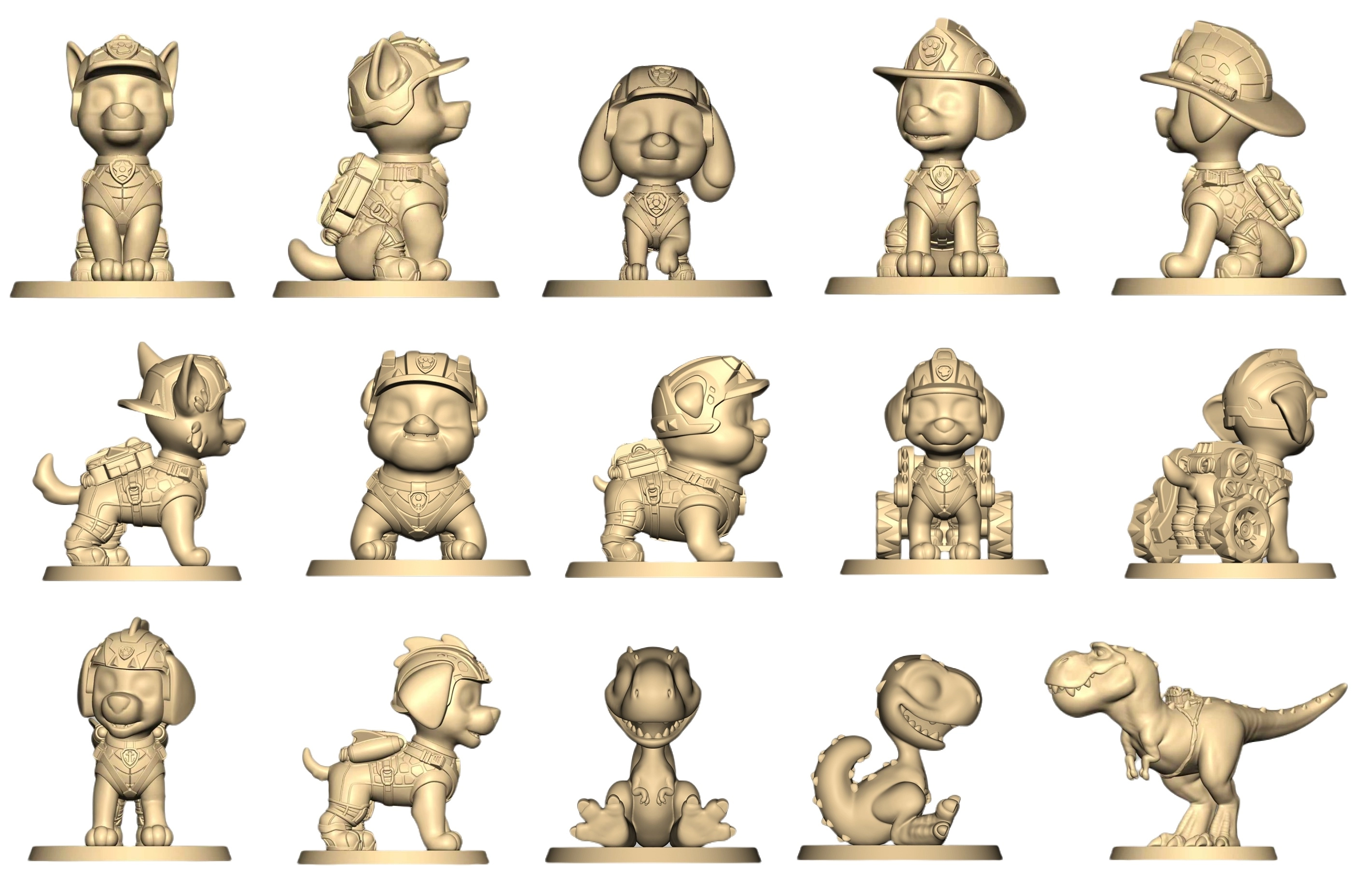
The short answer: a credible custom toy quotation separates one-time tooling cost from recurring unit cost, and breaks the unit cost into material, moulding, decoration, assembly, packaging, compliance and overhead/ margin. If your quotation arrives as a single lump-sum figure per unit with no tooling line and no material grade named, you cannot benchmark it — and you cannot tell which variable to change when the price is too high.
Most sourcing frustration on custom toy programmes comes from a quotation that answers the wrong question. The buyer asks "how much per unit" and receives a number that silently bundles a non-recurring engineering charge, an unstated material grade and an assumed decoration method. When the specification moves by one step, the number collapses — and the argument that follows damages the relationship rather than the price.
This guide explains how a well-structured quotation is built, which lines are genuinely negotiable, and which inputs you control that move the number most. Use it as a template for the quotation format you request, not just as a reading aid.
In this article
- Two buckets: one-time cost vs recurring unit cost
- The tooling line — what drives it and how to read it
- Material cost: grade, weight and why "PVC" is not a specification
- Moulding cost: machine time, cavities and cycle
- Decoration cost: the line most often underestimated
- Assembly, base and accessory cost
- Packaging and pack-out cost
- Compliance and testing cost allocation
- Overhead, margin and the lines that are not itemised
- Worked example: how the unit price is built
- The five levers that move unit price most
- The RFQ format that produces a usable quotation
- FAQ
Two buckets: one-time cost vs recurring unit cost
The first structural decision in any quotation is the split between costs you pay once and costs you pay per unit. Blurring the two makes the tooling look cheaper and the unit price look higher than it is — which flatters the supplier on the first order and penalises you on every order after it.
| Bucket | What belongs in it | How it behaves with volume |
|---|---|---|
| One-time / non-recurring | Sculpting and engineering, prototype, tooling, colour standard development, artwork and dieline, compliance testing | Fixed — divided across total units, so it falls sharply with higher volume |
| Recurring / per unit | Material, moulding machine time, decoration, assembly, packaging, carton and pack-out, inland freight to port | Near-linear — roughly the same per unit at 5,000 or 50,000 units, with modest scale effects |
A useful test of whether your supplier understands this: ask them to quote two quantities — say 3,000 and 20,000 units — and check whether the tooling portion stays constant while the unit portion moves only modestly. If the total-per-unit falls dramatically at the higher volume while the tooling number also changed, the quotation is being reverse-engineered from a target price rather than built from cost.
Why this protects you: once the two buckets are separated, the correct comparison is amortised total landed cost at your expected total programme volume, not unit price at your first order. A supplier with a slightly higher unit price but materially lower tooling cost can be the cheaper partner across a two-year programme.
The tooling line — what drives it and how to read it
Tooling is usually the largest single line in a custom figure programme, and the one with the widest legitimate spread between suppliers. It is a function of engineering, not of negotiating skill.
| Tooling cost driver | Effect on cost | What you should be told |
|---|---|---|
| Number of moulds / tools | Each separate tool is a separate large cost; more tools and more cavity groups raise cost stepwise | Explicit count of tools required |
| Cavity count per tool | More cavities raise tool cost but lower machine time per part — a genuine trade-off | Cavity count and the reasoning behind it |
| Part count on the figure | Head, body, limbs, accessories and base each add tooling | Part list with the tool each belongs to |
| Undercut complexity | Sliders, lifters and inserts add cost and add maintenance | Undercut handling stated per part |
| Surface finish requirement | SPI finish grade and texture add polishing labour | Named finish standard on the visible surfaces |
| Steel grade and tool life | Harder steel and better base material raise cost and extend shot life | Steel grade and expected shot count |
| Cooling design | Better cooling shortens cycle but adds machining | Whether cooling layout was optimised |
| Textures and engraving | Logos, part numbers, date clocks and texture etching are additional operations | Which marks are cut into the tool |
Three tooling questions with commercial consequences
- "How many cavities, and why?" Cavity count is a real trade-off. A low-cavity tool costs less up front but consumes more machine time per part. A high-cavity tool costs more but improves unit economics at volume. Ask for the reasoning against your forecast.
- "What tool life is guaranteed, and what is the maintenance interval?" Tool life is stated in shots. A tool with a stated life and a maintenance schedule is an asset; a tool with neither is a consumable you did not plan for.
- "What is the price of an engineering change after cutting?" Design changes after tooling are expensive because they are usually welded or re-cut rather than re-machined. Establish the change mechanism and cost band in advance — it removes the worst negotiation of the programme.
Ownership clause reminder: the quotation should state whether tooling is charged at cost, whether ownership transfers to you on payment, and whether storage and maintenance are included. These three details protect the largest line in the budget.
Material cost: grade, weight and why "PVC" is not a specification
Material is the most under-specified line in most quotations, and one of the largest recurring costs. "PVC" describes a polymer family, not a grade. Within the family, plasticiser content, additive package, colour masterbatch and compliance profile all vary — and so does price.
| Material question | Why it changes the price | What to demand in writing |
|---|---|---|
| Base resin family and grade | PVC, ABS and resin families differ materially in cost, feel, weight and finish behaviour | Named family and grade for each part |
| Plasticiser level (PVC) | Flexibility and feel are governed by plasticiser content, which is a cost and compliance variable | Plasticiser system stated, and whether it is phthalate-free |
| Part weight in grams | Material cost is weight × price per kilogram — the single most direct lever | Target part weight per component, after tooling is trialled |
| Colour masterbatch | Custom matched colour is more expensive than standard masterbatch and adds setup | Whether colour is masterbatch or painted, and the masterbatch ID |
| Compliance profile | Food-contact, phthalate-free or heavy-metal-limited grades cost more | The compliance requirement your market imposes and the grade selected to meet it |
| Runner and scrap recovery | Reusing regrind reduces material cost but affects appearance and compliance | Whether regrind is used, at what ratio, and on which parts |
| Packaging and moisture control | Hygroscopic resins need drying; poor handling creates defects | Drying procedure and moisture spec |
Ask for the weight, then watch it. Part weight is the honest denominator for material cost. Once T1 samples exist, weigh them and compare with the quoted weight. A persistent gap between quoted and actual weight is a quiet margin adjustment — usually in the supplier's favour on material, and occasionally a quality risk if weight was reduced by thinning walls.
Moulding cost: machine time, cavities and cycle
Moulding is charged as machine time, and machine time is the product of cycle time and the number of impressions per cycle. Both figures should appear in the quotation or its supporting note.
| Moulding cost driver | Mechanism | Question to ask |
|---|---|---|
| Machine tonnage | Larger machines cost more per hour | Which machine class is required, and why |
| Cycle time | Driven mostly by wall thickness and cooling quality | Quoted cycle time in seconds, and whether it was validated |
| Cavities per cycle | More cavities amortise machine time across more parts | Impressions per cycle for this tool |
| Shift structure | Labour and overhead are absorbed differently across shifts | Whether the quoted rate assumes a specific shift pattern |
| Machine-hour rate | Includes power, labour, depreciation and factory overhead | Whether the rate is inclusive of overhead or quoted separately |
| Yield and reject rate | Rejects consume machine time and material without producing sellable units | The yield assumption in the quote |
A worked sanity check you can run yourself: take the quoted unit moulding cost, multiply by the impressions per cycle, and compare the result with the stated machine-hour rate. The two should reconcile within a reasonable margin. Where they do not, ask which assumption differs — the answer is often an inflated reject allowance or an unstated second operation.
Yield is an under-asked line. A quotation that assumes 98% yield and delivers 92% consumes the difference out of your schedule and often out of your contingency. Ask for the yield assumption and, in the first production run, ask for the actual figure. This is a fair question and a serious manufacturer will answer it plainly.
Decoration cost: the line most often underestimated
For collectible figures, decoration frequently rivals or exceeds moulding cost. It is also the line least visible in a summary quotation, because decoration is quoted as a series of operations rather than a single number.
| Decoration method | Where it is used | Cost behaviour |
|---|---|---|
| Hand painting | Complex, multi-colour and effect finishes where masking and gradient work are needed | Highly labour-dependent; scales with colour count and detail |
| Pad printing | Simple graphics, logos, small marks and repeatable flat patterns | Low per-unit cost but needs a plate per graphic; registration limits apply |
| Spray and masking | Base coats, gradient effects, soft shading | Scales with mask complexity and the number of colours |
| Tampo / screen decoration | Flat panels and larger graphics | Setup per design plus a per-pass cost |
| Water transfer decals | Fine details, eyes, complex graphics | Decal cost plus application labour and a registration risk allowance |
| Clear coat / varnish | Protective and finish-effect topcoats | Per-pass cost; multiple passes compound |
| Assembly-line touch-up | Correcting paint defects before packing | Hidden labour cost; ask whether it is in the rate |
How to control decoration cost
- Fix the colour standard before quoting decoration. A Pantone reference or a physical swatch makes the labour assumption concrete. Without it, the supplier must price for uncertainty and will price high.
- Ask how many colours, and how many passes. Decoration is priced per colour and per pass. Reducing a design from nine colours to six is often the most effective single cost reduction available, and it usually preserves the visual intent.
- Ask whether any colour can move into the mould. Where a colour is a large flat area, running it as masterbatch rather than paint removes a labour step. This is a design decision, so it must be made before tooling.
- Establish the colour standard as the contractual reference. Both parties should retain a signed physical standard. Colour disputes are almost always traceable to a missing reference, not to a bad painter.
Labour-rate sensitivity: hand-painted work is the part of the quotation most sensitive to local labour rates and to staff experience. A supplier with an experienced painting team will produce a more stable per-unit figure than one that is learning the technique. Ask about the painting team's experience and whether they have run comparable multi-colour work.
Assembly, base and accessory cost
Assembly is quoted as a per-unit labour figure that depends on part count and fit difficulty. Articulated figures, display bases and accessories each add both parts and operations.
| Assembly element | Cost driver | Practical question |
|---|---|---|
| Part count | More parts means more handling and higher risk of fit defects | Total parts per assembled unit |
| Joint type | Snap-fit, glue and heat-stake differ in labour and in rework rate | Which joint method, and the expected rework allowance |
| Articulation range | Moving joints require functional checking, not just visual inspection | Whether each unit is functionally tested or sampled |
| Display base | A separate base usually means a separate tool and separate finishing | Whether the base is tooled with the figure or separately |
| Accessories and effect parts | Small translucent or clear parts add tooling, handling and breakage risk | Whether clear parts are included and how they are packed |
| Instruction or assembly card | A printed insert adds artwork, print and collation cost | Print specification and whether it is supplied by you |
Packaging and pack-out cost
For export programmes, packaging is a substantial recurring line and one where late changes are expensive. Because packaging requires its own artwork, tooling and testing cycle, it should be quoted alongside the product rather than added at the end.
| Packaging element | What drives cost | What to settle early |
|---|---|---|
| Primary packaging format | Window box, blister, colour box, polybag and header card differ widely in unit cost | Format confirmed against retail channel requirements |
| Printed artwork and colours | Print passes, specials and finishing effects such as varnish or foil | Artwork final and print colours locked |
| Window and lens material | PET/PVC windows add material and assembly risk | Whether a window is required at all |
| Insert / blister tray | Needs its own tooling and a separate mould cycle for thermoform | Insert tooling cost and lead time |
| Inner protection | Fragility of small parts and painted surfaces drives protection spend | Protection standard, ideally drop-tested |
| Carton and pack-out | Carton dimensions, outer strength grade, case count and pallet pattern | Case count and container fill plan |
| Shipping marks and labels | Market labelling, barcodes, age grading and traceability | Full label specification including market marks |
| Packaging test | Transit testing may be required by your customer or channel | Whether a transit test report is needed |
Per-unit packaging cost usually falls with carton efficiency. Optimising case count and container fill so that cartons fit a pallet and a container cleanly reduces freight as well as packaging material. Ask the supplier to propose a pack-out layout rather than accepting the first one — this is a cost line where a small engineering effort produces a compound saving across material and freight.
Compliance and testing cost allocation
Testing is normally a buyer cost, arranged by the manufacturer. Because it is a fixed cost tied to your specific product and BOM, it belongs in the one-time bucket — but it should still appear explicitly, with the tests named.
| Cost item | Typically borne by | Watch for |
|---|---|---|
| Test article and sampling | Buyer, sometimes included in the test fee | Whether the manufacturer's samples are billed separately |
| EN 71 / ASTM / CPSIA testing | Buyer | Any test not stated is not included |
| REACH / restricted substances | Buyer | Whether the coating is in scope or only the substrate |
| Test report revision after a change | Usually buyer | A change of material or paint may invalidate the report |
| Labelling artwork compliance | Buyer content, manufacturer execution | Whether the manufacturer reviews your artwork against the market rules |
| Certification scheme fees | Varies by scheme and market | Whether annual fees or factory audits are required |
The cost-saving move here is sequencing, not negotiation. Testing is far cheaper when the design and material are frozen. Test too early and a subsequent change invalidates the report; test too late and you risk tooling a non-compliant product. The efficient point is after pre-production samples are approved and before mass production begins.
Overhead, margin and the lines that are not itemised
Not every line in a quotation will be itemised, and it is not reasonable to demand a full open-book breakdown. But you should understand what is bundled into the rate, because those are the lines you cannot question later.
| Usually bundled | What it covers | Fair way to probe it |
|---|---|---|
| Factory overhead | Power, water, rent, depreciation, indirect staff | Ask what the machine-hour rate includes |
| Margin | Supplier profit | Compare quotes line by line rather than total to total |
| Yield allowance | Expected rejects and rework | Ask the assumed yield and revisit after first run |
| Inland freight | Movement to port or freight forwarder | Ask whether it is in the unit price or billed separately |
| Documentation | Packing lists, certificates of origin, invoice handling | Ask which export documents are included |
| Tool maintenance | Ongoing storage and servicing of the mould | Ask whether it is included or charged per event |
A cleaner way to compare suppliers than arguing over margin is to normalise the inputs. Re-quote every shortlisted supplier against the same frozen specification — same part weight, same colour count, same packaging format, same market compliance set. Comparisons on an identical brief are meaningful; comparisons on loosely specified briefs are not.
Worked example: how the unit price is built
The table below shows the shape of a built-up quotation for an illustrative collectible figure programme. The figures are illustrative and are included to show structure and relative weight, not as a price for any specific product.
| Line | Bucket | Behaviour | Share of unit cost (illustrative) |
|---|---|---|---|
| Sculpting and engineering | One-time | Fixed | Amortised across programme volume |
| Prototype / white sample | One-time | Fixed | Amortised |
| Tooling | One-time | Fixed | Typically the largest one-time line |
| Colour standard development | One-time | Fixed | Small but essential |
| Compliance testing | One-time | Fixed | Per test set, per market |
| Raw material | Recurring | Weight × price per kg | A large share of unit cost |
| Moulding | Recurring | Cycle × machine rate ÷ cavities | A significant share |
| Decoration | Recurring | Colours × passes + labour | Often comparable to moulding |
| Assembly | Recurring | Parts × handling time | Moderate |
| Packaging | Recurring | Format + artwork + insert | Moderate, and freight-linked |
| Carton and pack-out | Recurring | Case count and pallet layout | Small but compounds with freight |
| Overhead and margin | Recurring | Percentage on the above | Bundled in the rate |
Reading the table
The strategic insight is that the one-time lines are highly sensitive to total programme volume while the recurring lines are not. This means the correct question is rarely "can you reduce the unit price" and more often "what total volume across the programme makes this economically sensible, and which one-time lines can be phased or shared".
The five levers that move unit price most
| Lever | Typical direction | Effect | When it must be decided |
|---|---|---|---|
| Part weight / wall thickness | ↓ weight → ↓ material and ↓ cycle | Direct reduction in the two largest recurring lines | Before tooling |
| Colour count on decoration | ↓ colours → ↓ labour and ↓ passes | Often the largest available saving on collectible figures | Before the colour standard is frozen |
| Cavity count | ↑ cavities → ↑ tooling, ↓ machine time per unit | Trades one-time cost for recurring cost | At tooling quotation |
| Packaging format | ↓ complexity → ↓ material, print and labour | Compounds with freight savings | Before artwork is final |
| Programme volume | ↑ volume → ↓ amortised one-time cost | Lower total landed cost per unit | At programme planning |
Sequence matters more than effort. Every lever above must be pulled before the corresponding gate closes — weight before tooling, colour count before the standard is signed, packaging before artwork is final. After those gates, the same change costs an order of magnitude more, which is why a well-run programme front-loads its cost engineering rather than negotiating later.
The RFQ format that produces a usable quotation
Quotation quality is largely determined by the quality of your enquiry. Send the following and most of the ambiguity disappears before it can be priced.
| RFQ field | Why the supplier needs it | Example of a good entry |
|---|---|---|
| Product description and size | Determines sculpting effort and tooling scale | Collectible figure, 12 cm tall, two-part body with display base |
| Part list and articulation | Drives tool count and assembly labour | Head, torso, two arms, two legs, base; 4 points of articulation |
| Material family and key properties | Sets material grade and compliance options | PVC, phthalate-free, matte finish, minimum wall thickness to be advised |
| Decoration intent | Drives the decoration method and labour estimate | Six-colour hand-painted with a two-colour pad-printed logo |
| Target market and compliance | Determines the test set and material restrictions | EU retail, EN 71 plus REACH; age grade 8+ |
| Packaging format | Packaging is a separate tooling and artwork exercise | Printed colour box with window, retailer barcode, language variants |
| Quantities to quote | Enables the one-time/recurring split | Quote at 3,000, 10,000 and 30,000 units |
| Incoterm and port | Affects the cost structure of the quotation | FOB Shenzhen |
| Timeline expectation | Allows a realistic schedule with named gates | Target mass production start within the current quarter |
| IP status | Determines whether an NDA is required up front | Original design, no third-party licence; NDA before file transfer |
The last field is not administrative. Stating your IP position early lets the supplier put the right controls around the programme from the start, and it removes the most common reason for a delayed start — the confidentiality paperwork not being signed before files move.
FAQ
Should tooling cost be included in the unit price or quoted separately?
Quoted separately. Bundling tooling into the unit price obscures the one-time/recurring split, hides the effect of programme volume, and makes it difficult to establish tool ownership. Ask for two clear numbers and amortise the one-time figure yourself across your expected programme volume.
Is it reasonable to ask for an open-book cost breakdown?
A line-by-line structure — tooling, material, moulding, decoration, assembly, packaging — is a normal and reasonable request. A full open-book audit of the supplier's overhead and margin is not standard, and pressing for it rarely improves the outcome. Compare normalised quotations instead: identical specifications, quoted at the same quantities.
Why do two suppliers quote wildly different tooling for the same product?
Usually because they are not quoting the same tool. Cavity count, steel grade, undercut handling, cooling design and expected tool life can all differ. Ask each supplier to state cavity count, steel grade and expected shot life, then compare on those three inputs rather than on the headline figure.
What quantity should I ask the supplier to quote?
Ask for at least three quantities spanning a realistic range — for example the practical minimum, your expected annual volume, and an upside volume if the product performs. Three points let you see how the one-time cost amortises and where the recurring cost becomes stable.
Do payment terms affect the quoted price?
They can. Payment structure — particularly the deposit percentage and whether the tooling is paid separately from production — affects the supplier's working capital requirement and can be reflected in the price. Establish the payment structure early and quote on the basis you intend to use.
Want a quotation you can actually read?
Send us your specification — part list, material, decoration intent, target market and quantities — and we will return a structured quotation with the one-time and recurring lines separated, so you can see exactly which variable moves the price.
Related reading — choosing the supplier
A well-structured quotation is only useful if the manufacturer behind it is capable. Start with our buyer's audit checklist for vetting a custom toy factory.
Related reading — the schedule
Cost and time move together. See how a custom toy order runs from brief freeze to container loading, and where the approval gates sit.
Related reading
Cost is only one half of the programme. The other half is time — see how a custom toy order moves from brief to container, stage by stage.